
2026-06-10
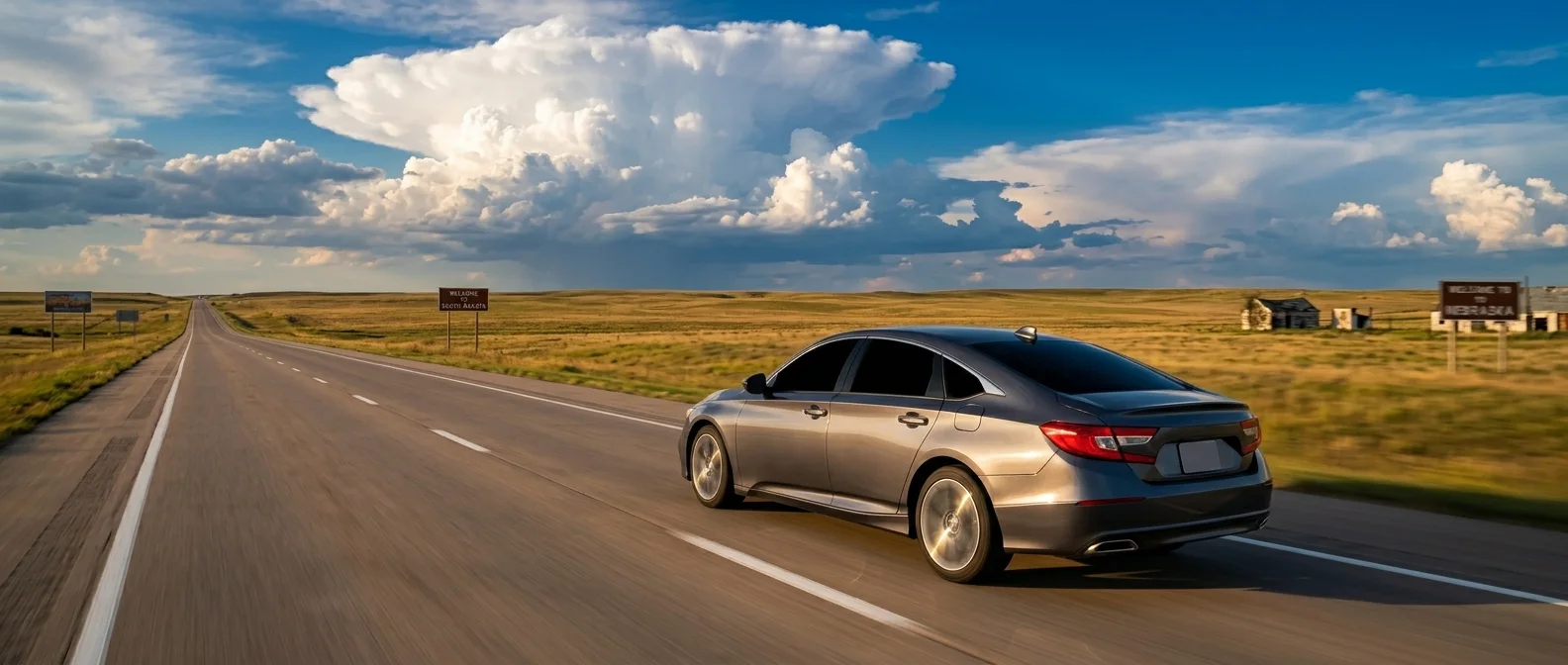
You booked the car, packed the bags, and mapped the route. Then someone asked the question you did not think to check: can you actually drive a rental car out of state? The good news is, for most people, the answer is yes. But the full answer is a little more complicated than that, and getting it wrong can void your insurance, cost you in unexpected fees, or put you in breach of your rental contract mid-trip.
This guide covers everything you need to know before crossing state lines in a rental car, from major company policies to mileage rules, insurance gaps, and the exceptions most travelers miss.
Most major car rental companies in the United States allow you to drive across state lines without restrictions. Brands like Enterprise, Hertz, Avis, Budget, National, and Alamo all permit interstate travel as a standard part of their rental agreements. If you rent a car in Texas and want to drive to New Mexico or Louisiana, you generally can. No special permission needed. No extra call to make.
That said, the word "generally" is doing a lot of work in that sentence.
The rental agreement is the document that controls everything. It defines where the car can go, how many miles you can put on it, and what happens to your insurance if something goes wrong outside those boundaries. Most travelers sign it at the counter and never look at it again. That is exactly the moment problems are created.
The company's general policy and your specific rental agreement are not always the same thing. A promotional rate booked on a deal site might come with geographic restrictions that the standard rate does not. A vehicle rented from a local neighborhood branch in a smaller market might have different terms than one rented from a major airport location.
A Phoenix-to-San Diego traveler shared this experience on a popular forum: "I just assumed it was fine. When I mentioned it at the counter, the agent had to switch my car to one that was approved for the trip." The car swap worked out, but the lesson is clear. Never assume. Always verify at pickup, and ideally before booking.
If you take a rental vehicle into a restricted area or country without authorization, several things can go wrong at once. Your collision damage waiver (CDW) and liability coverage may become void, meaning any accident that happens there is entirely your financial responsibility. The rental company can charge additional fees on top of the daily rate. In extreme cases, where the vehicle crosses into a country that was explicitly prohibited, the company may report the car as taken without authorization.
These are not hypothetical risks. GPS tracking is standard in modern rental fleets. Rental companies know where their cars go.
Understanding how the largest players handle interstate travel helps you book with confidence and ask the right questions.
All three brands allow driving across state lines. Avis recommends booking a one-way rental in advance if you plan to drop the car off in a different state, as additional fees apply for that. Budget follows a similar policy and will charge if you attempt to drop off at a different location without prior authorization. Both companies are clear that special promotional rates may not include unlimited mileage, which is critical to check for any long-distance road trip.
Enterprise allows out-of-state travel but specifies that one-way drops require booking and may carry extra charges, including a drop fee or mileage surcharge. National and Alamo follow similar rules within the Enterprise Holdings family. For standard round-trip rentals returning to the original location, interstate travel is permitted across the continental United States.
Hertz allows driving across state lines and handles one-way rental charges on a case-by-case basis depending on location and demand. Most standard Hertz rentals include unlimited mileage on round trips, which makes them a strong option for cross-country drives. One-way differentials can apply for trips over 500 miles depending on the specific rate class.
This is where the real restrictions live. Smaller regional companies often prohibit or significantly limit out-of-state travel because they do not have contracted tow networks, roadside assistance partners, or damage recovery capabilities in states where they do not operate. Fox Rent A Car, for example, runs a patchwork of state-specific rules depending on where you pick up the vehicle.
If you are renting from any company that is not one of the major national brands, confirm the geographic limits of your agreement before you drive anywhere near a state line.
The majority of complaints about out-of-state rentals come down to two things: mileage charges and one-way fees. Both are avoidable if you know what to look for.
Most standard rentals from major companies include unlimited mileage, which means you can drive from Miami to Seattle and back without any mileage surcharge. However, not all rates are standard. Weekend specials, promotional codes, discount offers, and certain vehicle classes like exotic or premium cars often come with daily mileage caps. Exceeding a cap can cost anywhere from 10 to 50 cents per additional mile depending on the company and vehicle.
For a 2,000-mile road trip on a capped rate, that overage can add hundreds of dollars to your final bill. Always look for the words "unlimited mileage" on your reservation confirmation. If they are not there, ask.
A one-way rental means you pick up the car in one location and drop it off at a different one. This is extremely useful for point-to-point travel, but it almost always comes with a drop-off fee. This fee exists because the rental company has to rebalance its fleet. A car left in Denver means Denver has one more car than it needs, while the city you picked it up from has one fewer.
Drop-off fees vary enormously. A short one-way trip between nearby cities might cost $50. A one-way trip from New York to Los Angeles can run $300 or more depending on the company, the season, and availability. The best way to manage this is to book the one-way trip directly at the time of reservation, compare prices across companies, and be flexible on vehicle class since fees sometimes vary by car type.
These two states operate under different rules. Alaska rental car policies almost universally require the vehicle to stay within the state. Hawaii is even more restrictive since the islands are physically separated: a car rented on Oahu cannot be taken to Maui, and vice versa. If your trip involves either state, factor this in before booking.
Insurance is the area most travelers understand least, and it is the area where the stakes are highest.
Most US personal auto insurance policies extend coverage to rental cars anywhere within the United States. If you have comprehensive and collision coverage on your own vehicle, that protection typically follows you into a rental car for domestic travel. Your liability limits also travel with you across state lines.
However, this does not mean you are automatically fully covered. Your personal policy's deductible still applies. If you are in a state where your policy's minimum liability limits are below the local legal requirement, your insurer may pay the difference, but this can create complications in a claim.
Before your trip, call your insurance provider and ask specifically: "Does my policy cover rental vehicles across all 50 states?" The answer is almost always yes, but confirming it takes 10 minutes and could save you from buying coverage you already have at the rental counter.
The CDW and LDW offered at the rental counter are not technically insurance policies. They are contractual waivers where the rental company agrees not to hold you responsible for damage to the vehicle. They typically cost between $15 and $35 per day on top of the rental rate.
If you have your own auto insurance or a credit card with rental car coverage, you may not need these waivers for domestic travel. Many premium credit cards, including those from Chase, American Express, and Citi, include secondary or primary rental car coverage as a cardholder benefit. The coverage only applies if you pay for the rental with that card and decline the rental company's waiver. Read the card's terms carefully because coverage limits and excluded vehicle types vary.
This is where the rules change significantly. Most US-based rental companies allow driving into Canada with minimal additional steps, often just informing the company and obtaining a cross-border letter at the counter. Your existing rental coverage generally extends to Canada.
Mexico is a completely different situation. Standard US rental insurance and personal auto policies do not cover driving in Mexico. You need to purchase a separate Mexican auto insurance policy before crossing the border, and most rental companies require a letter of authorization for the vehicle to leave the US. Companies like Hertz, Budget, and Avis each have specific Mexico policies that must be arranged before pickup, not at the border.
A few state-level rules apply regardless of which company you rent from.
Nevada and certain resort market locations sometimes limit the states to which a car can be driven. Las Vegas, for example, has location-level restrictions at some rental counters that limit out-of-state travel to neighboring states like Arizona, California, and Utah.
California has some of the most consumer-protective rental car regulations in the country, but it also has unique fee structures including a Customer Facility Charge that applies to most airport rentals. These do not affect where you can drive, but they affect what you pay.
New York has some of the most expensive rental markets in the country, and rates booked through third-party platforms can carry restrictions on one-way travel that standard direct bookings do not.
The practical takeaway: if you are renting from any destination-market location like Las Vegas, Orlando, or New York City, look up the location-specific terms before booking rather than assuming the national policy applies uniformly.
Treating this like a standard checklist before any long trip removes most of the risk. Before you take the keys and head across a state line, go through these steps.
Confirm your rental agreement does not restrict interstate travel for your specific rate and vehicle class. Verify that your rate includes unlimited mileage, or calculate whether a mileage cap creates risk for your trip distance. If you are dropping the car off in a different state, book a one-way rental explicitly and confirm the drop-off fee upfront. Check that your personal auto insurance or credit card covers rental vehicles across all US states. If you plan to drive into Canada, inform the rental company and get the necessary letter. If Mexico is part of your plans, arrange Mexican auto insurance and authorization well before pickup. Save the rental company's 24-hour emergency roadside number in your phone before you leave the lot.
This is exactly the approach taken at Luxus Car Rental, where the booking team walks customers through interstate and cross-border options at the time of reservation so there are no surprises at the checkpoint or at the end of the rental period.
Driving a rental car out of state is something most Americans do without any issue, and the major national companies make it straightforward to do. The risks are not in the concept itself. They are in the details that get skipped: mileage caps on promotional rates, one-way fees that were not expected, insurance gaps that only become visible when something goes wrong, and location-specific rules that override the general company policy.
Know your rental agreement. Verify your coverage. Ask about one-way fees before you book them. And if your trip involves anything beyond the continental 48 states, make that call to your rental company before you show up at the counter. The open road is genuinely one of the best ways to travel. A little preparation makes the whole thing work.
Can you drive a rental car across state lines in the US?
Yes. Most major rental companies allow interstate travel across the continental United States without restrictions or additional fees for round-trip rentals.
Do rental car companies know if you drive out of state?
Yes. Most modern rental vehicles carry GPS trackers, so rental companies can monitor where their cars travel throughout the rental period.
Does personal car insurance cover rental cars out of state?
In most cases, yes. US personal auto insurance policies typically extend to rental cars across all 50 states, but confirm with your insurer before your trip.
What is a one-way rental fee and how much does it cost?
A one-way fee applies when you drop the car off at a different location from where you picked it up. Costs range from $50 for short trips to $300 or more for cross-country drops.
Can you take a rental car to Mexico?
Not without special authorization and separate Mexican auto insurance. Standard US rental agreements do not cover Mexico, and most companies require advance arrangements before the vehicle crosses the border.
What happens to your insurance if you drive a rental car to a restricted area?
Your CDW, LDW, and personal auto coverage may all become void. Any accident in a restricted area becomes your full financial responsibility.
Which rental companies allow out-of-state driving?
Enterprise, Hertz, Avis, Budget, National, and Alamo all permit interstate travel. Smaller regional companies are more likely to impose geographic restrictions.
Tags
Can You Drive a Rental Car Out of State
Continue exploring our latest articles

Best Luxury Car Rental Companies in Dubai
Best 8 Luxury Car Rental Companies in Dubai (2026)

Do All Car Rental Companies Require a Deposit?
No. Not every car rental company asks for a deposit. But in Dubai, almost all of them do. Luxus Car ...

Can Tourists Rent a Car in Dubai
Yes, tourists can rent a car in Dubai. As long as you have a valid passport, a tourist or visit visa...